Xterra SMOD Radiator Bypass: Your Fix Guide
Protect your 2005-2010 Nissan Xterra automatic transmission from the Strawberry Milkshake of Death: diagnose SMOD, fit an external cooler, flush both loops.
One-tap dark, screen-awake, step-by-step reading for hands-on work.
Not sure this is the problem? Run the symptom diagnostic to compare likely causes.
Nissan Xterra SMOD Radiator Bypass: Fix Guide
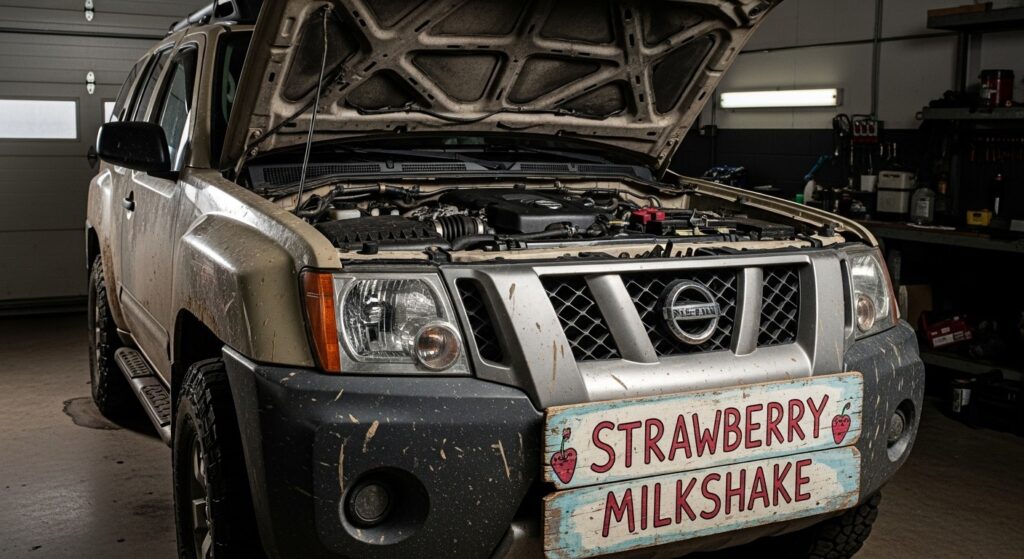
If you own a 2005-2010 Nissan Xterra, you may have heard whispers of a terrifying, transmission-killing issue known by a deceptively sweet name: the "Strawberry Milkshake of Death," or SMOD. This isn't just a quirky nickname; it’s a catastrophic failure that can leave you with a multi-thousand-dollar repair bill if you're not careful. The problem stems from a design flaw in the factory radiator, where the internal transmission cooler fails, allowing engine coolant and automatic transmission fluid (ATF) to mix.
When green or blue coolant combines with red ATF, it creates a frothy, pinkish-brown sludge that looks disturbingly like a melted strawberry milkshake. This contaminated fluid quickly loses its ability to cool the engine and lubricate the transmission, leading to rapid and severe internal damage. For many unsuspecting owners, the first sign of trouble is a transmission that has already started to fail.
The good news? This disaster is both preventable and fixable. By performing a Nissan Xterra SMOD radiator bypass, you can completely isolate the transmission from the faulty radiator cooler, protecting it from cross-contamination. This guide will walk you through everything you need to know, from diagnosing the problem to installing an external cooler and saving your Xterra from a costly fate.
What is the "Strawberry Milkshake of Death" (SMOD)?
At its core, SMOD is a catastrophic fluid cross-contamination event specific to second-generation Nissan Frontiers, Pathfinders, and Xterras (2005-2010) equipped with the V6 engine and automatic transmission. Understanding the cause is the first step toward the solution.
The Root Cause: A Fatal Radiator Flaw
The factory radiator, made by Calsonic, includes an internal heat exchanger designed to cool the automatic transmission fluid. A manufacturing defect allows the brazing on this internal cooler to crack over time. Once cracked, the higher pressure of the engine's cooling system (around 15 psi) forces coolant directly into the lower-pressure transmission fluid circuit. This mixture is the infamous "strawberry milkshake," a sludgy emulsion that signals the beginning of the end for your transmission. The worst part is that the visual evidence often only appears after the contamination has begun to wreak havoc.
How SMOD Destroys Your Transmission
When coolant and ATF mix, both fluids are rendered useless.
- Transmission Fluid (ATF): Coolant contamination destroys ATF's lubricating properties. The clutch packs inside the transmission, which rely on this fluid for smooth engagement, begin to slip, burn, and disintegrate. The contaminated fluid also clogs the delicate passages in the valve body, leading to harsh shifts, gear hunting, or complete failure to engage gears.
- Engine Coolant: ATF contamination reduces the coolant's ability to transfer heat, leading to engine overheating, which can cause its own set of expensive problems.
Expert Warning: Once coolant and transmission fluid mix, the transmission is almost invariably destroyed. The clutch packs and valve body are the first components to fail, and if the vehicle continues to be driven, complete transmission failure is imminent.
How to Diagnose SMOD in Your Xterra
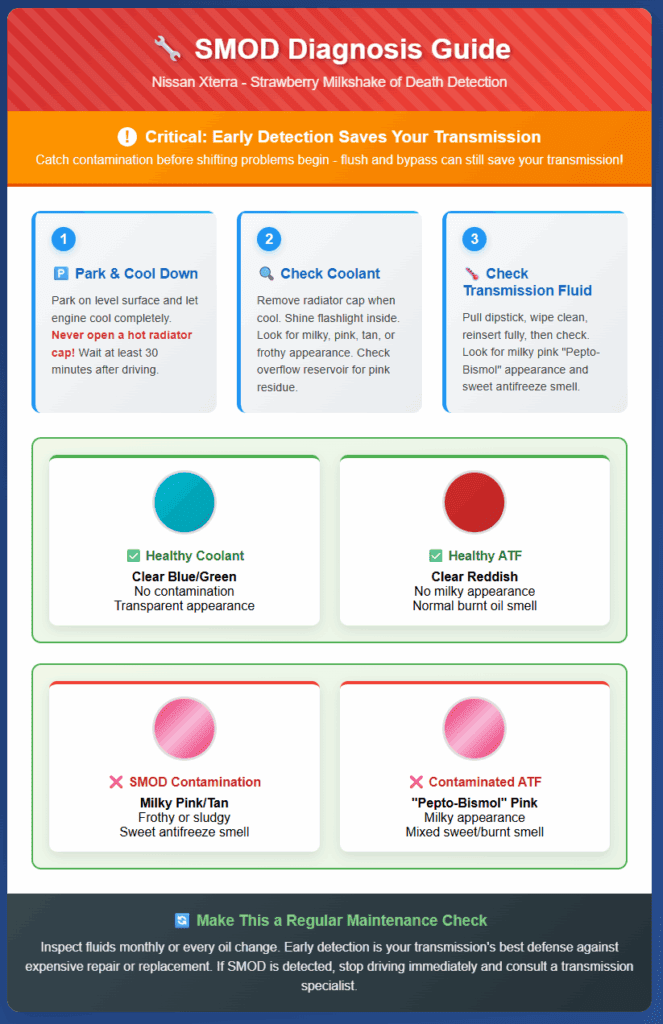
Early detection is the single most important factor in saving your transmission from SMOD. If you catch the contamination before shifting problems begin, you have a very high chance of success with a flush and bypass. Make these checks a regular part of your maintenance routine.
Step-by-Step Fluid Inspection
- Park and Cool Down: Park the vehicle on a level surface and let the engine cool down completely. Never open a hot radiator cap.
- Check the Coolant: Once cool, remove the radiator cap. Shine a flashlight inside. The coolant should be a clear blue or green. If it looks milky, pink, tan, or has a frothy, sludgy appearance, you have SMOD. Also, inspect the plastic coolant overflow reservoir for any pink, sticky residue.
- Check the Transmission Fluid: Pull the transmission dipstick. Wipe it clean, re-insert it fully, and pull it out again. Healthy ATF is a clear reddish color. If the fluid on the dipstick is milky pink or looks like Pepto-Bismol, SMOD is confirmed. You may also notice a sweet smell from the antifreeze mixed with the burnt smell of compromised ATF.
Key Symptoms of SMOD Contamination
Beyond a visual fluid check, be on the lookout for these warning signs:
- Transmission Slipping: The engine revs up, but the vehicle doesn't accelerate properly.
- Harsh Shifts: Gears engage with a jarring clunk.
- Hesitation or Shuddering: The vehicle hesitates during acceleration.
- Overheating Engine: The temperature gauge climbs into the red zone.
- Check Engine Light: A diagnostic code related to the transmission may be triggered.
Can Your Transmission Be Saved?
Your ability to save the transmission depends entirely on the severity of the contamination and whether you've experienced any shifting issues.
- Good Chance of Survival: If you caught it early, have no shifting problems, and the ATF is only slightly discolored (light pink and still translucent), you can likely save it. The fix involves a thorough flush of both systems and installing an external cooler.
- Likely Too Late: If the transmission has already started slipping, shifting harshly, or acting erratically, the internal damage is likely done. If the ATF is a thick, opaque brown or smells burnt, a full transmission replacement or rebuild is almost certainly necessary in addition to fixing the radiator issue.
Tools and Materials Needed for the Bypass
Before you start, gather all the necessary parts and tools. Being prepared will make the job much smoother and prevent you from getting stuck halfway through.
Essential Parts & Fluids
- External Transmission Cooler: A high-quality plate-fin cooler is recommended. The Derale Series 9000 or a Hayden 14-row cooler are popular and effective choices.
- Transmission Hose: You'll need several feet of high-pressure 3/8" or 1/2" transmission cooler line.
- Hose Clamps: Get high-quality clamps to ensure a leak-free seal.
- Transmission Fluid: Your RE5R05A transmission requires Nissan Matic J or Matic S ATF. Plan on getting at least 12-16 quarts for a proper flush.
- Engine Coolant: Use Nissan Genuine Long Life (blue) antifreeze. You'll need about 2-3 gallons.
- Transmission Filter & Gasket Kit: It is critical to replace the filter to remove trapped debris.
- Fittings/Adapters: Depending on your cooler and how you connect to the existing lines, you may need brass barb fittings or other adapters.
Recommended Tools
- Basic Mechanic's Wrench and Socket Set (8mm - 19mm)
- Pliers (including hose clamp pliers)
- Screwdrivers (Phillips and flathead)
- Two Large Drain Pans
- Funnel
- Jack and Jack Stands
- Shop Towels and Gloves
- Radiator Fin Comb (optional but helpful)
The Nissan Xterra SMOD Radiator Bypass: A Step-by-Step Guide
This procedure will permanently isolate your transmission from the factory radiator. By routing the ATF through a dedicated air-cooled unit, you eliminate the risk of SMOD forever.
Step 1: Vehicle Preparation
Park on a level surface, engage the parking brake, and allow the engine to cool completely. Disconnect the negative battery terminal for safety. Use a jack to lift the front of the vehicle and secure it on jack stands.
Step 2: Draining Contaminated Fluids
Place a drain pan under the radiator and open the drain plug at the bottom to drain all the coolant. Also, drain the overflow reservoir. Next, place a large pan under the transmission and remove the transmission oil pan to drain the contaminated ATF. This is a good time to clean the pan magnet and replace the filter.
Step 3: Accessing the Cooler Lines
Locate the two small metal lines running into the bottom of the radiator. These are the transmission cooler lines. Carefully disconnect them from the radiator fittings. Be prepared to catch any residual fluid. It's a great idea to label the lines (e.g., "out from trans" and "return to trans") so you don't mix them up. The "out" line is the hot fluid coming from the transmission to be cooled.
Step 4: Installing the External Transmission Cooler
Find a secure mounting location for your new external cooler, typically in front of the A/C condenser and radiator where it will get maximum airflow. Use the supplied brackets to mount it firmly. Route your new transmission hoses from the cooler to the hard lines you just disconnected.
- Connect the "hot out" line from the transmission to the inlet port of the external cooler.
- Connect a new hose from the outlet port of the external cooler back to the "return" line on the transmission.
Ensure all hoses are routed away from moving parts and sharp edges, and secure every connection with a hose clamp. The original ports on the radiator can now be capped off.
Step 5: Flushing Both Systems Thoroughly
This is the most critical step for saving your transmission.
- Cooling System: Reinstall the radiator drain plug. Fill the system with distilled water, run the engine for 10-15 minutes with the heater on high, then drain it. Repeat this process until the water drains out completely clear, with no signs of oily ATF residue. Finally, fill the system with a 50/50 mix of Nissan blue coolant and distilled water.
- Transmission System: Reinstall the clean transmission pan with the new filter and gasket. Refill the transmission with fresh ATF (about 4-5 quarts). Start the engine, and cycle the shifter through all the gears (P-R-N-D), pausing for a few seconds in each. Drain the fluid again. You will need to repeat this drain-and-fill cycle 3 to 5 times until the fluid draining out is clean and bright red.
Step 6: Reassembly and Final Checks
Once your fluids are clean, perform a final fill of the transmission to the correct level on the dipstick (check with the engine idling in Park). Double-check every hose clamp and fitting for tightness. Lower the vehicle, start the engine, and let it run for several minutes while you check for any leaks from the coolant system or your new transmission lines. Take it for a short test drive, then re-check all fluid levels.
Cost Analysis and Recommended Parts
Addressing SMOD can range from a few hundred dollars for a proactive DIY bypass to several thousand for a shop-installed new transmission.
| Item/Service | DIY Cost Estimate | Professional Shop Cost Estimate |
|---|---|---|
| Preventive Bypass (Parts Only) | $150 - $250 | $400 - $600 (includes labor) |
| SMOD Fix (Bypass + Flush) | $200 - $350 | $600 - $1,000+ |
| Radiator Replacement (Updated OEM) | $450 - $600 (parts) | $800 - $1,200+ |
| Transmission Replacement | N/A | $2,500 - $4,500+ |
Choosing the Right Parts
- External Coolers: Plate-fin style coolers like the Derale Series 9000 Plate-Fin Transmission Cooler (D13614) are highly efficient and a top recommendation. Tube-fin coolers from Hayden are also a reliable and cost-effective choice.
- OEM Radiator: If you prefer a stock solution, you can replace your old radiator with the updated post-2010 OEM part (#21460-9CA0E). This part has the improved internal cooler design, but it is a significantly more expensive option than the bypass.
- Fluids: Do not cut corners here. Use Nissan Matic J/S ATF and Nissan Blue Coolant to ensure compatibility and longevity.
Tips & Tricks for a Smooth Job
Here are a few extra tips from those who have been there and done that:
- Save Money on the Flush: For the initial 2-3 transmission flush cycles, you can use a less expensive, compatible Dexron/Mercon ATF. For the final fill, however, make sure you use the proper Nissan Matic fluid.
- Protect Your Airflow: While you have access, use a radiator fin comb to gently straighten any bent fins on your A/C condenser and radiator. This improves airflow and helps all your cooling systems work more efficiently.
- Label Everything: Before you disconnect the original transmission lines from the radiator, use colored zip ties or tape to mark which one is the outlet and which is the return. This simple step prevents a catastrophic mistake when hooking up your new cooler.
- Monitor Temps After: After the bypass, your transmission is relying solely on the new external cooler. For most driving, this is more than enough. However, if you do heavy towing or intense off-roading, consider installing a simple transmission temperature gauge to keep an eye on things.
Nissan Xterra SMOD Radiator Bypass – FAQ
What is the "Strawberry Milkshake of Death" (SMOD)?
A failure of the radiator's internal transmission cooler that lets engine coolant mix with ATF, creating a pink, milky sludge that rapidly damages the transmission.
Which Xterra models are affected?
Primarily 2005–2010 Nissan Xterra models with the V6 and automatic transmission. Related Frontier and Pathfinder models from the same era can also be affected.
What are the early signs of SMOD?
Milky/pink coolant, milky/pink ATF on the dipstick, sticky pink residue in the overflow tank, overheating, slipping or harsh shifts, hesitation, or transmission-related check engine codes.
How do I confirm SMOD?
Inspect coolant under the radiator cap (when cold) and check ATF on the dipstick. Clear blue/green coolant and transparent red ATF are healthy; milky/frothy or pink/tan suggests contamination.
What does the radiator bypass do?
It disconnects the transmission cooler circuit from the factory radiator and routes ATF through a dedicated external air-to-oil cooler, eliminating the cross-contamination risk.
What parts do I need for the bypass?
External plate-fin transmission cooler, 3/8" (or 1/2") transmission hose, quality hose clamps, appropriate fittings/adapters, Nissan Matic J/S ATF, Nissan blue coolant, and a transmission filter/gasket kit.
Can a transmission be saved after SMOD?
If caught early with no slipping/harsh shifts and only light discoloration, thorough flushing plus a bypass may save it. If shifting issues or burnt, opaque fluid are present, a rebuild/replacement is likely.
How do I orient the external cooler lines?
Connect the hot "out from transmission" line to the cooler inlet, and the cooler outlet back to the transmission return. Keep hoses away from sharp edges/moving parts and clamp all connections securely.
How much does it cost?
DIY preventive bypass runs roughly $150–$250 in parts. Full SMOD recovery (bypass plus extensive flushing) may run $200–$350 DIY. Professional costs are higher; transmission replacement can exceed $2,500.
Any tips for a smoother job and long-term reliability?
Label lines before disconnecting, use a fin comb to improve airflow, consider a temp gauge if towing/off-roading, use compatible ATF for initial flushes and finish with Nissan Matic, and thoroughly flush both cooling and transmission systems until fluids run clean.
Conclusion - Fix your "Strawberry Milkshake" issue
The "Strawberry Milkshake of Death" is a daunting issue for any Nissan Xterra owner, but it doesn't have to be a death sentence for your vehicle. Armed with the right knowledge and a willingness to get your hands dirty, you can perform a radiator bypass that not only fixes the problem but also permanently protects your transmission from this well-known factory flaw. The bypass is a reliable, cost-effective, and proven solution embraced by the Xterra community.
If you own a 2005-2010 model, don't wait for the symptoms to appear. A proactive inspection of your fluids can be the difference between a weekend project and a financial nightmare. Check your coolant and ATF today. If they look clean, consider installing an external cooler as a preventive measure. If you see the dreaded pink milkshake, stop driving immediately and follow this guide. Taking action now will ensure your Xterra remains a reliable companion for many more adventures to come.